
Automotive Wire Size Guide: How to Choose the Right 12V Cable
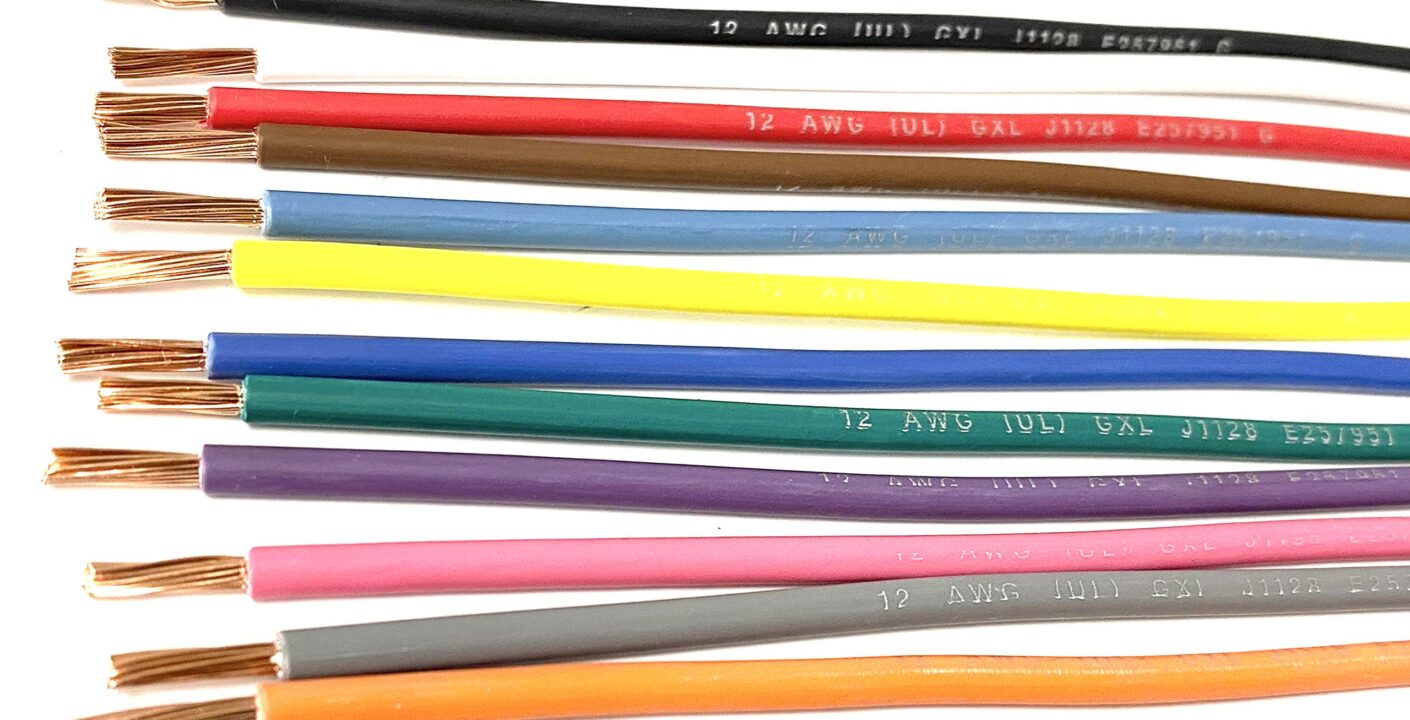
Choosing the correct automotive wire is essential for a safe, reliable vehicle electrical system. Cable that is too small for the circuit can cause excessive voltage drop, heat and poor electrical performance. Cable that is larger than necessary can add cost, weight and make installation more difficult.
The right cable size depends on more than the accessory you are connecting. You need to consider the current draw, total cable length, system voltage, installation environment and acceptable voltage drop.
This automotive wire size guide explains the main factors to consider when choosing cable for cars, 4WDs, caravans, trailers and other automotive applications.
Why Automotive Wire Size Matters
Electrical current encounters resistance as it travels through a cable. Resistance generally increases as the cable becomes longer and decreases as the conductor becomes larger.
If resistance becomes excessive, some of the available voltage is lost before it reaches the connected equipment. This is known as voltage drop.
Voltage drop is particularly important in 12V vehicle electrical systems because even a relatively small voltage loss represents a noticeable percentage of the available supply. Lights may become dimmer, motors may perform poorly and sensitive electrical equipment may receive less voltage than intended.
When choosing automotive cable, consider:
- Current draw in amps
- Total circuit length
- System voltage
- Cable construction
- Installation temperature
- Cable routing
- Acceptable voltage drop
- Type of electrical accessory
Current capacity and voltage drop are related, but they are not the same thing. A cable may be capable of carrying the required current while still producing too much voltage drop over a long run.
Manufacturers may also rate similar-looking cables differently depending on conductor construction, insulation and testing conditions. Narva notes that temperature conditions influence automotive cable amp ratings, so always check the specifications of the actual cable being installed.
Understanding Automotive Wire Sizes
Automotive cable in Australia is commonly sold using size descriptions such as:
- 2mm
- 3mm
- 4mm
- 5mm
- 6mm
- 8 B&S
- 6 B&S
- 3 B&S
- 2 B&S
- 0 B&S
- 00 B&S
These descriptions help distinguish cable products, but the size printed on automotive cable should not automatically be treated as its conductor cross-sectional area.
For example, cable sold as 3mm automotive cable may have a conductor area considerably smaller than 3mm².
That distinction matters when comparing products or checking whether a cable is suitable for a particular load.
Before choosing a cable, check the manufacturer’s specifications for:
- Conductor area
- Current rating
- Outside diameter
- Insulation type
- Maximum operating temperature
KP Automotive supplies Australian-made automotive wire in several commonly used sizes, along with twin-sheathed cable, trailer cable and heavier B&S battery cable.
A Simple Automotive Wire Size Guide
There is no single automotive cable size that suits every circuit. The table below gives a practical overview of where different cable groups may be used and what needs to be checked before making a final choice.
| Cable Type | Typical Automotive Applications | What to Check Before Choosing It |
| Light automotive wire | Signal circuits, low-current accessories and control wiring | Equipment current draw and cable length |
| 3mm automotive wire | Relays, switches, lighting and smaller accessory circuits | Actual conductor area and manufacturer rating |
| 4mm automotive wire | Lighting, accessories and moderate-current circuits | Current draw, run length and voltage drop |
| 5mm automotive wire | Higher-current accessories and equipment | Manufacturer rating and installation conditions |
| 6mm automotive wire | Larger accessories, power feeds and higher-current circuits | Current requirement and total circuit length |
| 8 B&S battery cable | Battery feeds, charging systems and higher-current accessories | Cable rating, run length and connector compatibility |
| 6 B&S battery cable | Dual battery systems, charging circuits and heavy accessory feeds | Current demand, voltage drop and terminations |
| Larger B&S cable | High-current battery, starter and power distribution applications | Equipment specifications and circuit design |
This table is a starting point rather than a substitute for proper cable selection.
Before choosing the final size, confirm the connected equipment’s maximum current draw, the complete cable run and the manufacturer’s cable specifications. Long 12V runs may require a larger conductor to control voltage drop even when a smaller cable can safely carry the current.
Start With the Current Draw
The first figure to establish is the maximum current the connected device is expected to draw.
This will usually be expressed in amps and may be listed on:
- The product label
- Packaging
- Installation instructions
- Specification sheet
- Product webpage
Some equipment lists power in watts instead of amps.
For a basic DC circuit, current can be estimated using:
Amps = Watts ÷ Volts
For example, a 120-watt accessory operating from a nominal 12V supply has a theoretical current draw of approximately 10 amps.
This gives you a useful starting point. Where available, use the equipment manufacturer’s specifications for the actual current requirements.
Equipment such as motors, compressors and pumps may also draw more current during startup than during normal operation. Cable, switches, connectors and circuit protection need to suit the actual electrical demands of the equipment.
Cable Length Changes the Size You Need
Cable length is one of the most easily overlooked parts of automotive wiring.
A cable that performs adequately over a short distance may produce excessive voltage drop over a much longer run.
Consider a typical 4WD installation. A cable running from a nearby fuse box to an accessory under the dashboard may only travel a short distance. Supplying equipment in the rear cargo area can require several metres of cable through the vehicle.
Even when the electrical load is the same, the longer run may require a larger conductor to control voltage drop.
When assessing cable length, consider the complete current path rather than only the positive cable. Where positive and negative cables both run between the power source and the accessory, both conductors contribute to the circuit’s total resistance.
Cable length is particularly important for:
- Dual battery installations
- Caravan electrical systems
- Trailer wiring
- Rear-mounted refrigerators
- Compressors
- Electric brakes
- Inverters
- Auxiliary fuse panels
- Work lights
- Camping accessories
For longer runs, check voltage drop before selecting the final cable size.
12V Systems Are Sensitive to Voltage Drop
Most passenger vehicles and many 4WD accessory systems operate around 12 volts, which makes voltage drop especially important.
A one-volt loss in a 240V circuit represents a small percentage of the supply. A one-volt loss in a 12V circuit represents a much larger percentage.
Excessive voltage drop can contribute to:
- Reduced light output
- Slow electric motors
- Poor compressor performance
- Charging problems
- Unreliable electronic accessories
- Excessive heat in cables or connections
- Unexpected equipment shutdowns
This is why current-carrying capacity alone is not enough to determine the correct automotive cable size.
Voltage drop as a percentage can be calculated using:
Voltage drop % = voltage lost ÷ supply voltage × 100
The acceptable voltage drop depends on the circuit and connected equipment. Check the equipment and installation requirements rather than applying one figure to every vehicle circuit.
Connections matter too. Correctly sized cable can still perform poorly if terminals are loose, damaged, corroded or incorrectly crimped.
What Is B&S Battery Cable?
B&S stands for Brown and Sharpe, a sizing system commonly associated with heavier electrical cable.
You may also see similar cable sizing described using AWG terminology.
An important point is that B&S numbers work in the opposite direction to what many people initially expect. As the B&S number becomes smaller, the conductor becomes larger.
For example:
8 B&S → 6 B&S → 3 B&S → 2 B&S → 0 B&S
The cable becomes progressively heavier through that sequence.
B&S cable is commonly used where larger conductors are needed between batteries, charging equipment and power distribution points.
Typical applications include:
- Battery connections
- Dual battery systems
- DC-to-DC charger installations
- High-current accessory feeds
- Starter circuits
- Anderson plug wiring
- Auxiliary power systems
KP Automotive supplies 8 B&S and 6 B&S battery cable along with larger B&S sizes for heavier automotive applications.
6 B&S vs 8 B&S Cable
Both 6 B&S and 8 B&S cable are commonly used in automotive electrical installations.
The main difference is straightforward: 6 B&S has a larger conductor than 8 B&S.
That does not mean 6 B&S should automatically be used for every circuit.
8 B&S may suit applications that require a substantial conductor without moving to heavier battery cable.
6 B&S provides a larger conductor and may be chosen where the current requirement or cable length calls for heavier cable.
The correct choice still depends on:
- Current requirement
- Cable length
- Acceptable voltage drop
- Installation conditions
- Specifications of the cable being installed
Terminations must also match the chosen cable. Cable lugs, Anderson contacts and other connectors need to suit both the conductor size and electrical load.
Single Core, Twin Core and Twin-Sheathed Cable
Cable size is only part of the decision. Construction also affects whether a cable is suitable for a particular installation.
Single Core Automotive Wire
Single core cable contains one insulated conductor.
It is commonly used for:
- Positive power feeds
- Earth connections
- Switch wiring
- Relay circuits
- Lighting
- Accessory wiring
Using different cable colours can make circuits easier to identify during installation, fault-finding and future servicing.
Twin Core Cable
Twin core cable contains two conductors together.
It can be useful where positive and negative wiring follows the same route, including lighting and accessory circuits that require a dedicated return conductor.
Keeping both conductors together can also make the circuit easier to route and identify.
Twin-Sheathed Cable
Twin-sheathed cable has an additional outer protective sheath around the internal conductors.
The sheath can provide extra mechanical protection where cable is exposed to movement, abrasion or other installation hazards.
KP Automotive supplies Australian-made twin-sheathed automotive cable within its electrical range.
Consider Where the Cable Will Be Installed
The installation environment can affect both cable performance and service life.
Wiring protected behind a dashboard faces different conditions from cable routed through an engine bay or underneath a vehicle.
Consider whether the cable may be exposed to:
- Engine bay heat
- Water
- Road debris
- Fuel or oils
- Sharp edges
- Vibration
- Movement
- UV exposure
- Tight bends
Cable routed underneath a vehicle generally requires more mechanical protection than wiring installed in a protected interior location.
Depending on the installation, protection may include:
- Split conduit
- Braided sleeving
- Heat shrink
- Cable ties
- Grommets
- Additional insulation
Avoid routing cable directly against sharp metal edges or components that become very hot.
Where conditions are demanding, check the cable manufacturer’s temperature and installation specifications before installation.
Match the Fuse to the Wiring
A fuse or circuit breaker protects an electrical circuit when excessive current flows.
Circuit protection should be selected as part of the overall wiring design rather than treated as a separate decision after the cable is installed.
Using heavier cable does not mean the circuit should automatically have a higher-rated fuse. The protective device needs to suit the intended circuit, connected equipment and cable.
For battery-fed accessory circuits, protection is generally positioned close to the power source so that as much of the cable run as practical is protected.
KP Automotive supplies circuit protection products alongside automotive wire, connectors, terminals and other electrical accessories. (KP Automotive)
Do Not Forget the Connections
Cable is only one part of a reliable automotive electrical circuit.
Every terminal, connector and joint creates another point where resistance can develop if the connection is poor.
Use terminals that suit both the conductor size and the type of connection being made.
Common automotive options include:
- Cable lugs
- Ring terminals
- Spade terminals
- Blade terminals
- Butt splice connectors
- Deutsch connectors
- Anderson connectors
A good crimp should hold the conductor securely and provide a reliable electrical connection.
Connections exposed to moisture, dirt or road conditions may also need sealing or additional protection.
Before selecting the final cable size, make sure the required terminals, connectors, fuse holders and other components are compatible with the conductor.
Common Automotive Wire Sizing Mistakes
Many automotive wiring problems begin with a simple cable-selection mistake.
Choosing Cable by Accessory Type Alone
Do not assume every fridge, light, compressor or other accessory has the same electrical requirements.
Check the actual current or power specifications for the equipment being installed.
Ignoring Cable Length
Longer cable runs generally create more resistance and voltage drop.
A cable that performs well over a short distance may not be the right choice for the same electrical load at the rear of a vehicle, caravan or trailer.
Assuming the Printed Size Is the Conductor Area
Automotive cable descriptions can be confusing.
A nominal cable name such as 3mm should not automatically be read as 3mm² conductor area. Check the manufacturer’s specifications before comparing products or calculating suitability.
Using Cable That Is Too Small
Undersized wiring can cause excessive voltage loss, heat and poor accessory performance.
The cable must satisfy the circuit’s current requirements while keeping voltage drop within an acceptable range.
Ignoring Terminals and Connectors
The cable does not work in isolation.
Terminals, connectors, switches, fuses and other circuit components also need to suit the electrical load and conductor size.
Choosing Automotive Wire for Your Vehicle
A practical cable-selection process comes down to seven questions:
- What voltage does the vehicle or circuit use?
- What is the maximum current draw of the connected equipment?
- How long is the complete cable run?
- How much voltage drop is acceptable for the equipment?
- Where will the cable be installed?
- What physical protection does the cable require?
- Which fuse, terminal and connector sizes are compatible?
Once you have those answers, compare them with the specifications of the cable you intend to use.
This approach is more reliable than choosing automotive wire by accessory type, cable appearance or nominal size alone.
For example, a 120-watt accessory on a nominal 12V system has a theoretical current draw of about 10 amps. That figure establishes the electrical load, but it does not determine the final cable size on its own. You still need to consider the full cable run, acceptable voltage drop, installation conditions and the specifications of the cable being used.
The same principle applies to equipment mounted further from the power source. A rear-mounted accessory can require a longer cable run than equipment installed near a fuse box, so voltage drop may become a more important factor even when the accessory’s electrical load remains the same.
Find the Right Automotive Wire for Your Installation
Choosing automotive cable comes down to four main factors: the equipment’s maximum current draw, the total circuit length, acceptable voltage drop and the conditions where the cable will be installed.
Short, low-current accessory circuits may suit standard automotive wire. Longer runs and higher-current equipment may require heavier cable such as 8 B&S, 6 B&S or larger battery cable.
Always confirm the conductor area and electrical rating of the specific cable rather than relying on its nominal size alone.
KP Automotive supplies automotive electrical products for vehicle wiring projects, including automotive wire, battery cable, connectors, crimp terminals, insulation, circuit protection and electrical tools.
Before ordering, confirm:
- The equipment’s maximum electrical load
- The complete cable length
- The cable manufacturer’s specifications
- The required terminals and connectors
- The circuit protection required for the installation
If you are uncertain about the correct cable size or circuit design, speak with an experienced auto electrician or suitable product specialist before completing the installation.
Matching the cable, protection and connections to the actual electrical demands of the vehicle gives you a stronger basis for a safe and reliable installation.