
Automotive Cable by the Metre: How to Calculate the Length You Need
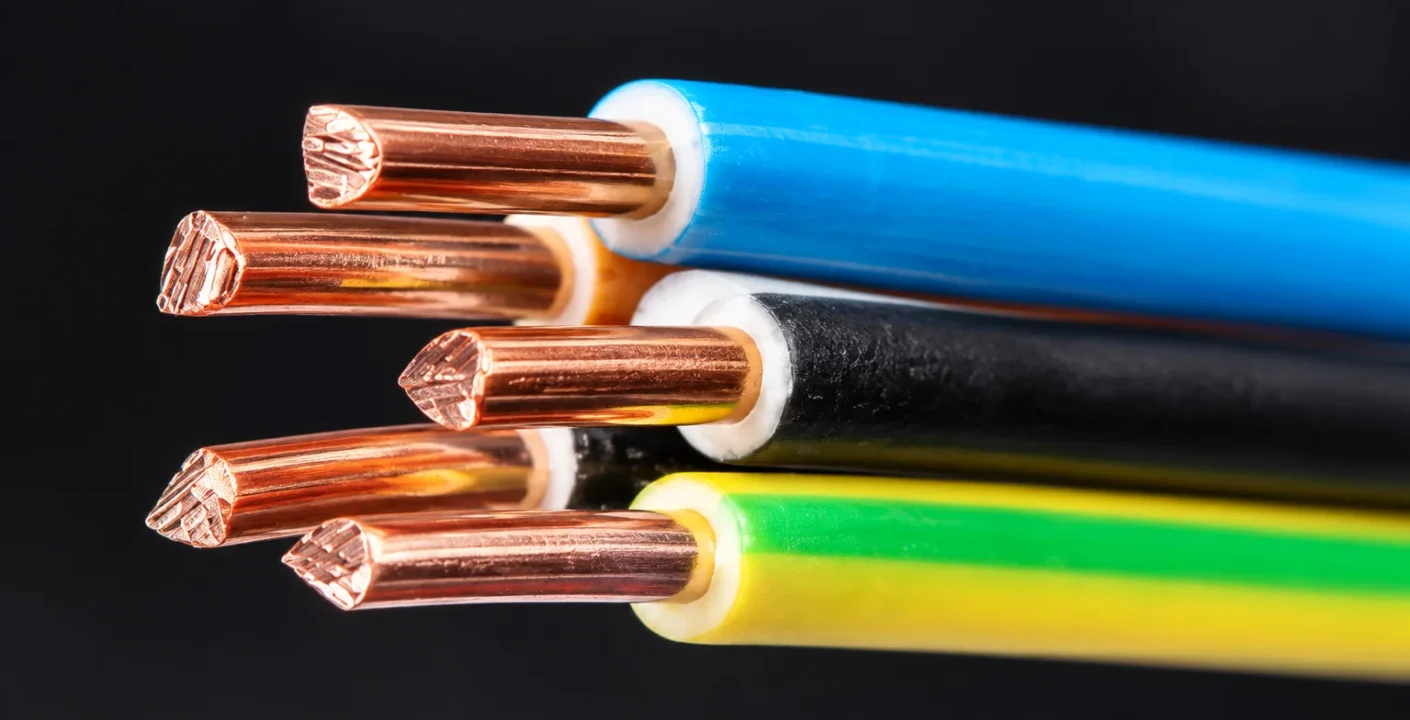
Automotive cable by the metre allows you to buy the right amount of wire for a vehicle, trailer, caravan or machinery installation without unnecessary waste. The challenge is that the required length is rarely the same as a straight-line measurement between two connection points.
Cable may need to follow existing wiring looms, pass around panels, travel through engine bays, run behind interior trim or allow enough movement for servicing. Positive and negative connections may also require separate cable runs.
This guide explains how to calculate automotive cable length, choose the correct cable size and plan your order before starting an installation.
How to Calculate Automotive Cable Length
A simple cable calculation starts with the complete installation route.
Cable required = measured route length + return path + installation allowance
Before ordering automotive cable, calculate:
- The route the cable will follow
- The number of cable runs required
- The cable size needed for the circuit
- Extra length for connections, movement and future servicing
For example:
- Battery to fridge: 5 metres
- Fridge return cable to battery: 5 metres
- Base cable requirement: 10 metres
- Installation allowance: 15%
Total cable requirement: approximately 11.5 metres.
Always round the final amount up to a practical purchasing length. Having a small amount of spare cable can also help with future repairs or adjustments.
Why Buy Automotive Cable by the Metre?
Automotive cable by the metre lets you purchase a length suited to the planned installation rather than buying more cable than required.
It is commonly used for:
- Accessory installations
- Vehicle wiring repairs
- Driving lights
- Work lights
- Trailer wiring
- Caravan electrical systems
- Dual-battery systems
- Switch panels
- Pumps and compressors
- Audio equipment
- Agricultural machinery
- Workshop repairs
A small accessory installation may only require a few metres, while a complete trailer, caravan or vehicle rewire may require several cable sizes, colours and longer lengths.
Planning the circuit first makes it easier to order the correct cable and avoid shortages during installation.
Choose the Cable Size Before Calculating Length
Cable length and cable size are closely connected. A longer circuit creates more electrical resistance, which can increase voltage drop.
Before ordering automotive cable, consider:
- System voltage
- Maximum current draw
- Total circuit length
- Acceptable voltage drop
- Installation temperature
- Cable-routing conditions
- Equipment manufacturer requirements
The cable’s current rating must suit the circuit. The conductor also needs to be large enough to keep voltage drop within an acceptable range.
A cable suitable for a short run may not be suitable for the same accessory installed several metres further away from the power source.
Understand Automotive Cable Measurements
Automotive cable may be described using:
- Conductor area in mm²
- American Wire Gauge (AWG)
- Battery and starter cable sizes
- Nominal automotive cable sizes
- Outside cable diameter
Check the listed conductor area and current rating before ordering. These specifications provide a more reliable indication of cable capacity than the outside diameter alone.
A cable advertised as “4mm automotive wire” may not contain a 4mm² copper conductor. Always check the product specifications before installation.
Measure the Planned Cable Route
Measure the path the cable will follow during installation.
Avoid measuring directly between the power source and accessory. Vehicle wiring often needs to pass:
- Around the engine bay
- Along the firewall
- Through existing grommets
- Behind interior trim
- Under carpet or flooring
- Inside chassis rails
- Along a trailer drawbar
- Through a canopy
- Around storage compartments
- Inside protective conduit
Use a flexible tape measure, length of string or spare wire to trace the proposed route. Follow the same bends and changes in direction planned for the finished installation.
Measure the string or temporary wire afterwards to determine the base cable length.
Include Both Sides of the Circuit
A complete electrical circuit requires a path from the power source to the device and a return path.
If both positive and negative cables run directly between the battery and accessory, include both lengths in your calculation.
Example:
| Cable section | Length |
| Battery positive to fridge | 5 metres |
| Fridge negative return to battery | 5 metres |
| Total cable requirement | 10 metres |
Some installations use the vehicle chassis as the negative return. In this case, include the cable length from the accessory to a suitable earth point.
The earth path and connection must still be capable of carrying the circuit current.
Add an Installation Allowance
Ordering the exact measured length leaves little room for routing changes, termination, mistakes or future servicing.
A practical allowance is usually:
- 10% extra for short, simple and accessible cable routes
- 15% extra for vehicle interiors and engine-bay installations
- 20% extra for trailers, caravans, canopies or complex routes
For a measured requirement of 10 metres:
| Installation type | Allowance | Recommended purchase length |
| Simple accessible route | 10% | 11 metres |
| Interior or engine-bay installation | 15% | 11.5 metres |
| Complex route such as trailer or caravan wiring | 20% | 12 metres |
Round the final amount up to a practical length available for purchase.
A small amount of leftover cable can also be useful for future repairs, test connections and minor additions.
Allow Cable for Terminations and Servicing
Every connection requires some additional cable for stripping, positioning and termination.
Allow extra length near:
- Battery terminals
- Fuse holders
- Circuit breakers
- Relays
- Switches
- Distribution blocks
- Connector plugs
- Earth points
- Accessory terminals
Large lugs and battery connections may require more working room than smaller crimp terminals. Cable ends can also become damaged during installation, so additional length allows the connection to be remade if required.
A service loop is another useful allowance. This is a controlled amount of additional cable left near a component or connector to make future maintenance easier.
A service loop can allow equipment to be:
- Removed from its mounting position
- Turned for easier terminal access
- Disconnected without pulling the wiring tight
- Re-terminated after cable damage
- Adjusted during servicing
Secure service loops properly and keep them away from sharp edges, hot components and moving parts. Avoid leaving loose coils where they can vibrate or collect water.
Allow for Doors, Drawers and Moving Equipment
Cable connected to moving components needs enough length to move through its full range without tension.
Examples include:
- Vehicle doors
- Tailgates
- Bonnets
- Boot lids
- Canopy doors
- Slide-out drawers
- Tilting trays
- Folding solar panels
- Electric seats
- Trailer couplings
Move the component through its full operating range while measuring the cable path.
The wiring should have enough flexibility for movement and should be protected where required using suitable conduit, grommets and strain relief.
Planning Cable for a Single Accessory
For a simple accessory circuit, list each cable section separately before ordering.
Example: Driving Light Installation
A driving light circuit may include:
- Battery to fuse holder
- Fuse holder to relay
- Relay to left light
- Relay to right light
- Light earth connections
- Switch trigger wire
- Relay earth wire
Measure each section along the planned route.
Add the lengths together by:
- Cable size
- Cable colour
- Circuit function
The main power supply cable may require a larger conductor than lower-current relay trigger wiring.
Planning Cable for Multiple Accessories
Vehicles with several accessories often use a shared supply cable feeding a fuse block or distribution point.
Possible cable sections include:
- Battery to main fuse
- Main fuse to distribution block
- Distribution block to individual fuses
- Fuse outputs to accessories
- Individual negative returns
- Main negative cable
- Switch and relay wiring
Create a basic circuit list before purchasing cable.
| Circuit | Cable size | Colour | Measured length | Allowance | Order length |
| Main accessory supply | 10mm² | Red | 4m | 20% | 5m |
| Main negative return | 10mm² | Black | 4m | 20% | 5m |
| Work lights | 4mm² | Red | 6m | 15% | 7m |
| Light earths | 4mm² | Black | 3m | 15% | 3.5m |
| Switch triggers | 1.5mm² | Blue | 4m | 15% | 5m |
The sizes shown are examples only. Complete a current and voltage-drop assessment for the actual equipment.
How Much Cable Do You Need for Trailer Wiring?
Trailer wiring length depends on the trailer size, number of circuits and cable route.
Measure from the plug at the drawbar to the furthest electrical component. Include:
- Drawbar length
- Chassis routing
- Tail lights
- Side markers
- Number-plate lights
- Electric brakes
- Reverse lights
- Auxiliary power
- Earth-return wiring
- Junction boxes
- Cable entry and exit points
A multi-core trailer cable can carry several circuits within one outer sheath. Individual cable may still be required for branch connections, brake wiring, earths or higher-current accessories.
Allow a flexible loop at the coupling so the tow vehicle and trailer can turn without stretching the cable. Keep the loop clear of the road, safety chains and moving coupling components.
How Much Cable Do You Need for a Dual-Battery System?
Dual-battery systems can require heavy cable between:
- Starter battery
- Fuse or circuit breaker
- Isolator or DC-to-DC charger
- Auxiliary battery
- Earth points
- Distribution equipment
Measure the complete positive and negative route.
Include allowance for:
- Fuse placement near each battery
- Cable routing around heat sources
- Battery movement or removal
- Lug termination
- Protective conduit
- Access to charger terminals
Long charging circuits may require a larger conductor to limit voltage drop.
How Much Cable Do You Need for a Caravan or Canopy?
Caravans and canopies commonly use multiple cable sizes and colours.
Typical circuits include:
- Battery supply
- Solar input
- Fridge
- Lighting
- Water pump
- Ventilation fans
- USB outlets
- Accessory sockets
- Inverter supply
- Monitoring equipment
- External lights
Create a floor plan or basic wiring diagram before ordering cable.
Mark the location of:
- Battery
- Fuse block
- Switches
- Equipment locations
Measure each cable route and group the requirements by conductor size and colour.
Longer roll lengths may be more practical where several circuits use the same cable type.
Single-Core or Multi-Core Cable?
Automotive cable selection depends on the number of circuits, available space and the installation requirements.
Single-core cable contains one insulated conductor. It is commonly used for individual:
- Power runs
- Earth connections
- Signal wires
- Accessory circuits
Multi-core cable contains several insulated conductors inside one outer sheath. It can simplify installations where multiple circuits need to run together.
Multi-core cable can be useful for:
- Trailers
- Lighting assemblies
- Control panels
- Switches
- Pumps
- Equipment with multiple signals
Before ordering multi-core cable, confirm that every conductor has the required:
- Size
- Current capacity
- Colour identification
Some equipment requires a larger power conductor alongside smaller signal wires. A standard multi-core cable may not provide the required combination, meaning separate cables or a different cable type may be needed.
Choose Cable Colours Before Ordering
Cable length and cable size are closely connected. A longer circuit creates more electrical resistance, which can increase voltage drop.
Australian cable-selection standards also account for these factors. The Western Australian Government notes that the updated AS/NZS 3008.1.1:2025 standard includes expanded DC current-carrying capacities, resistance and voltage-drop tables, along with worked DC cable-selection examples for systems up to 1,500 V DC.
Before ordering automotive cable, consider:
- System voltage
- Maximum current draw
- Total circuit length
- Acceptable voltage drop
- Installation temperature
- Cable-routing conditions
- Equipment manufacturer requirements
Colour conventions can vary between vehicles, industries and trailer standards. Always check existing wiring diagrams and document any new colour assignments.
Avoid using the same colour for unrelated circuits without labels or identification.
When Is a Full Roll More Practical?
Buying a full cable roll may be practical when:
- Several circuits use the same cable size
- A workshop completes regular repairs
- A vehicle is being fully rewired
- Multiple trailers or machines require wiring
- Future accessories are planned
- Several colour-coded circuits are needed
KP Automotive lists Australian-made automotive wire in multiple colours and roll lengths, including 30-metre products across common nominal sizes in its Automotive Wire range.
Compare the total calculated requirement with available roll lengths. A full roll may provide enough cable for the current project and future maintenance.
Avoid Unnecessary Joins
Running short of cable can result in additional joins being added to the circuit.
Every connector or splice creates another potential point for:
- Voltage drop
- Corrosion
- Mechanical failure
- Incorrect crimping
- Moisture entry
- Future diagnostic issues
Plan continuous cable runs where practical.
If a join is required, use a connector or terminal suitable for:
- The cable size
- The current load
- The installation environment
Check Your Calculation Before Ordering
Before purchasing automotive cable by the metre, review each circuit and confirm the total requirement.
Use this process:
- List every circuit required.
- Select the correct cable size for each circuit.
- Decide the cable colours needed.
- Mark the power source, protection devices and equipment locations.
- Measure the actual installation route.
- Include positive and negative cable runs.
- Add branch connections and switch wiring.
- Include service loops and moving sections.
- Add a 10% to 20% installation allowance.
- Group totals by cable size and colour.
- Round each total up to the available purchase length.
Record the final cable sizes and colours in the vehicle or equipment wiring diagram for future reference.
Find Automotive Cable for Your Project
Automotive cable by the metre is easier to order accurately when the complete circuit requirements have been calculated first.
KP Automotive supplies automotive cable and electrical components for vehicle, trailer, caravan, machinery and workshop applications. Available products include single-core wire, twin-sheathed cable, trailer cable and battery cable in multiple sizes and roll lengths.
Before ordering, confirm the required:
- Current capacity
- Voltage-drop performance
- Conductor size
- Cable colour
- Total cable length
Planning the route and calculating the complete circuit requirement helps reduce shortages, unnecessary joins and excess cable while creating a cleaner installation.